


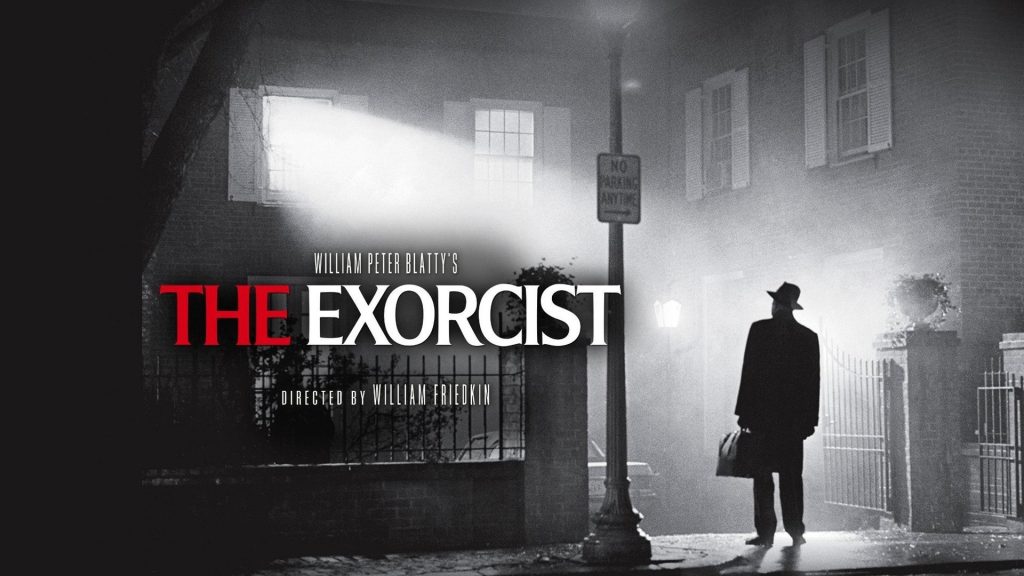
When debating the most famous horror movies ever made, The Exorcist (1973) often ranks first. Under William Friedkin’s direction, this picture is more than simply a supernatural horror movie; it’s a cultural landmark that stretched limits, horrified viewers, and permanently altered the subgenre. Decades after its premiere, The Exorcist (1973) still appeals to viewers with its distinctive mix of psychological terror, cold environment, and innovative special effects.
![100+] The Exorcist Wallpapers | Wallpapers.com](https://wallpapers.com/images/hd/the-exorcist-scariest-film-of-all-time-0wbggjwdb7vppwx7.jpg)

| Category | Details |
|---|---|
| Title | The Exorcist (1973) |
| Release Date | December 26, 1973 |
| Genre | Supernatural Horror |
| Director | William Friedkin |
| Writers | William Peter Blatty |
| Producers | William Peter Blatty |
| Production Companies | Warner Bros. Pictures |
| Distributor | Warner Bros. Pictures |
| Country | United States |
| Language | English |
| Main Cast | Ellen Burstyn, Max von Sydow, Linda Blair, Jason Miller, Lee J. Cobb |
| Plot | A 12-year-old girl is possessed by a mysterious entity, and her mother seeks the help of two Catholic priests to save her. |
| Running Time | 122 minutes |
| Budget | $12 million |
| Box Office | $441 million |
| Music Composer | Mike Oldfield |
| Cinematography | Owen Roizman |
| Editing | Norman Gaye |
| Awards | Won 2 Oscars, 18 wins & 21 nominations total |
| Preceded by | N/A (Original) |
This page explores the specifics of the background, release, production, and cast of the movie as well as its enormous influence on the business of films.
Release Date:
December 26, 1973 saw the United States premiere The Exorcist (1973). Surprisingly close to the holiday season, this post-Christmas release was a unique choice for a horror movie. Still, it paid off beautifully, producing a striking contrast between the gloomy, terrible world of the movie and the joyous attitude. Because of its strong topics, gory violence, and dubious representation of religious exorcism, the film’s premiere was greeted with a combination of critical praise and general public indignation.
![100+] The Exorcist Wallpapers | Wallpapers.com](https://wallpapers.com/images/hd/william-peter-blatty-the-exorcist-y5925rhhtyd2lb93.jpg)

Notwithstanding the criticism, or maybe in response to it, The Exorcist (1973) became a box office sensation. At the time, it was among the highest-grossing pictures ever made, earning nearly $440 million globally—a historic triumph for a horror film.
Plot Summary
Inspired on a real-life exorcism case, William Peter Blatty’s 1971 book of the same name forms the basis for the film. Linda Blair’s character, Regan MacNeil, is a little child who develops demonic entity possession. Chris MacNeil (Ellen Burstyn), her mother, seeks assistance from the Catholic Church, which sets off a dramatic exorcism carried out by Father Merrin (Max von Sydow) and Father Karras (Jason Miller).
The Exorcist (1973) genius is in its thorough investigation of ideas like religion, uncertainty, and the struggle between good and evil as much as in its terrible images. The movie combines aspects of psychological drama and supernatural horror to create a philosophical meditation on the human condition in addition to a story of possession.
Cast & Staff
The Exorcist (1973) ensemble gave performances that viewers would have been deeply embedded in their brains for decades. Among the important players are Ellen Burstyn as Chris Mac Neil, the frantic mother looking for answers and atonement for her possessed daughter.


- Linda Blair as Regan MacNeil: The innocent 12-year-old turned vehicle for a terrible demonic power. Though actress Mercedes McCambridge speaks most of her language in the possessed portions, her performance resulted in an Academy Award nomination.
- Max von Sydow as Father Merrin: Called upon for the exorcism, the seasoned, older priest who has battled evil forces before.
- Jason Miller as Father Damien Karras: A young Jesuit priest grappling with his faith, he turns into one of the main protagonists in the movie as he faces his internal demons while fighting the actual one carrying Regan.
William Friedkin, a director most recognized from his work on The French Connection (1971), oversaw the movie. The claustrophobic, very disturbing tone of The Exorcist (1973) was created in great part by Friedkin’s directing. From unexpected gunshots to actual physical stress, he was exact in his approach and sometimes used unusual methods to get the performances he needed from his performers. Owen Roizman’s ambient photography together with his directing produced the eerie look that made the movie distinctive.
Author of the original book William Peter Blatty also wrote the script, therefore assuring that the movie maintained true to the source material and improved its cinematic possibilities.
Sites of Filming
Although the MacNeil family hosts much of the movie, The Exorcist (1973) was filmed at many sites to enhance its authenticity. Originally found in Georgetown, Washington, D.C., the famous stairs Father Karras meets his death have since become a popular tourist destination also known as the “Exorcist Steps.”
While Georgetown University and other areas of Washington, D.C. were utilized for outside sequences, giving the picture a grounded, realistic atmosphere among the otherworldly terror, the interior views of the MacNeil home were filmed on a set in New York City.
Financial Insights and Budget
For a horror movie in the early 1970s, The Exorcist (1973) budget was around $12 million—a large number. Still, the investment paid off handsomely because the movie went on to rank among the top grossing films of its day with lifetime profits of around $ 440 million worldwide.
The film’s budget was mostly set for its innovative visual effects, which were very vital in realizing the most startling events in the book. Regan’s head-spinning scene was one of the most unforgettable events accomplished using a complex mechanical replica of Linda Blair’s head. Practical effects—including chilled sets to replicate the supernatural cold—created other effects like the levitation scene and the icy breath shown in the exorcism scenes.
The Exorcist (1973)box office performance was unparalleled despite high production expenses. Including Best Picture, it became the only horror movie nominated for 10 Academy Awards to win two: Best Adapted Screenplay (Blatty) and Best Sound.
Legacy and Cultural Effect
The Exorcist (1973) permanently changed popular culture as well as the horror subgenre. Its horrific themes, religious implications, and hideous images set off strong arguments that resulted in demonstrations and censing in several nations. Still, this just piqued public interest and increased theatrical attendance.
The popularity of the movie also opened the path for next horror movies as it demonstrated that the genre could be both commercially and creatively fulfilling. It influenced directors for next generations to come, therefore helping to confirm horror as a genre deserving of popular critical praise.
With many sequels, prequels, and even a TV series carrying on the tale of demonic possession, The Exorcist is clearly still relevant today. None have, meantime, been able to equal the cultural and cinematic influence of the original.
Ultimately
Beyond jump scares to appeal to deeper concerns about religion, evil, and the unknown, The Exorcist (1973) is still a masterwork of horror movies. For both filmmakers and horror buffs, it remains a benchmark because to its outstanding ensemble, creative direction, and memorable images. The Exorcist will always be a timeless masterpiece for next generations because of its cultural phenomenon heritage and impact on the horror genre.